


















Welcome to the staging ground for new communities! Each proposal has a description in the "Descriptions" category and a body of questions and answers in "Incubator Q&A". You can ask questions (and get answers, we hope!) right away, and start new proposals.
Are you here to participate in a specific proposal? Click on the proposal tag (with the dark outline) to see only posts about that proposal and not all of the others that are in progress. Tags are at the bottom of each post.
A knight's sightseeing tour Question
Puzzle
How short can you make a closed knight’s sightseeing tour?
Terminology
Standard terminology
- A chess board is an 8 by 8 chequerboard.
- A knight is a chess piece that moves 2 squares horizontally then 1 vertically, or 2 vertically then 1 horizontally. The knights in the following diagram can reach any of the correspondingly coloured marked squares in 1 move.
(thanks to Wikipedia)
- A knight’s tour is a sequence of moves that visits every square exactly once.
- A closed knight’s tour visits every square exactly once and then returns to its starting square.
Terminology specific to this puzzle
- A square is visible to a knight if the knight can reach it in 1 move.
- A closed knight’s sightseeing tour is a sequence of moves that visits no square more than once and then returns to its starting square, such that every square on the board is visible from at least one of the squares in the tour. (To avoid doubt: Note that the starting square is included as one of the squares in the tour.)
After completing a sightseeing tour, the knight has not necessarily visited every square, but it has seen every square. A closed knight’s tour automatically also counts as a closed knight’s sightseeing tour, but is longer than it needs to be.
You are free to choose any square on the board as the starting square.
Leaderboard
| Username | Shortest knight's sightseeing tour |
|---|---|
| will.octagon.gibson | 20 |
| trichoplax | 26 |

2 answers
Length 36
Here is a way to reduce the number of visited squares from 64 to 36:
Hidden method
Since every square on the outer border of the board is visible from squares in the central 6 by 6 grid, it is sufficient to visit only the 36 squares in that central grid. This means a conventional closed knight's tour (rather than a sightseeing tour) of a 6 by 6 board can be a closed knight's sightseeing tour of an 8 by 8 board. Here is one example:
Hidden closed knight's sightseeing tour on an 8 by 8 board
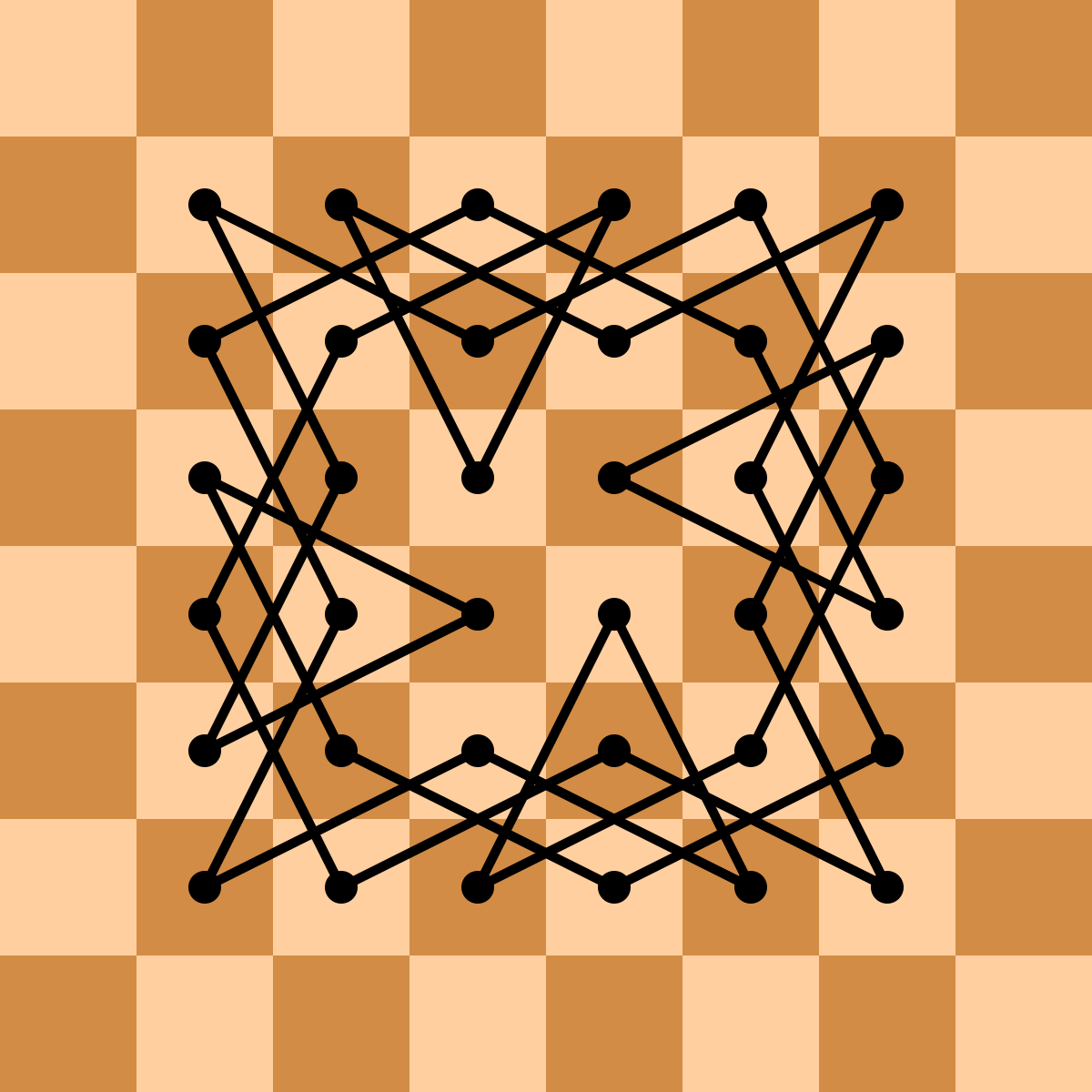
This is not the shortest possible, just something to start off a leaderboard and encourage competition.
Length 26
I tried to use a similar approach to reduce from 36 to 24, but could only manage 26:
Hidden method
A 4 by 6 grid would also see every square outside it, so I tried to find a closed knight's tour on a 4 by 6 grid. The best I could find were either open tours (not returning to the starting square) or 2 separate closed tours which I couldn't find a way to connect, like this:
Hidden failed attempt on a 4 by 6 grid
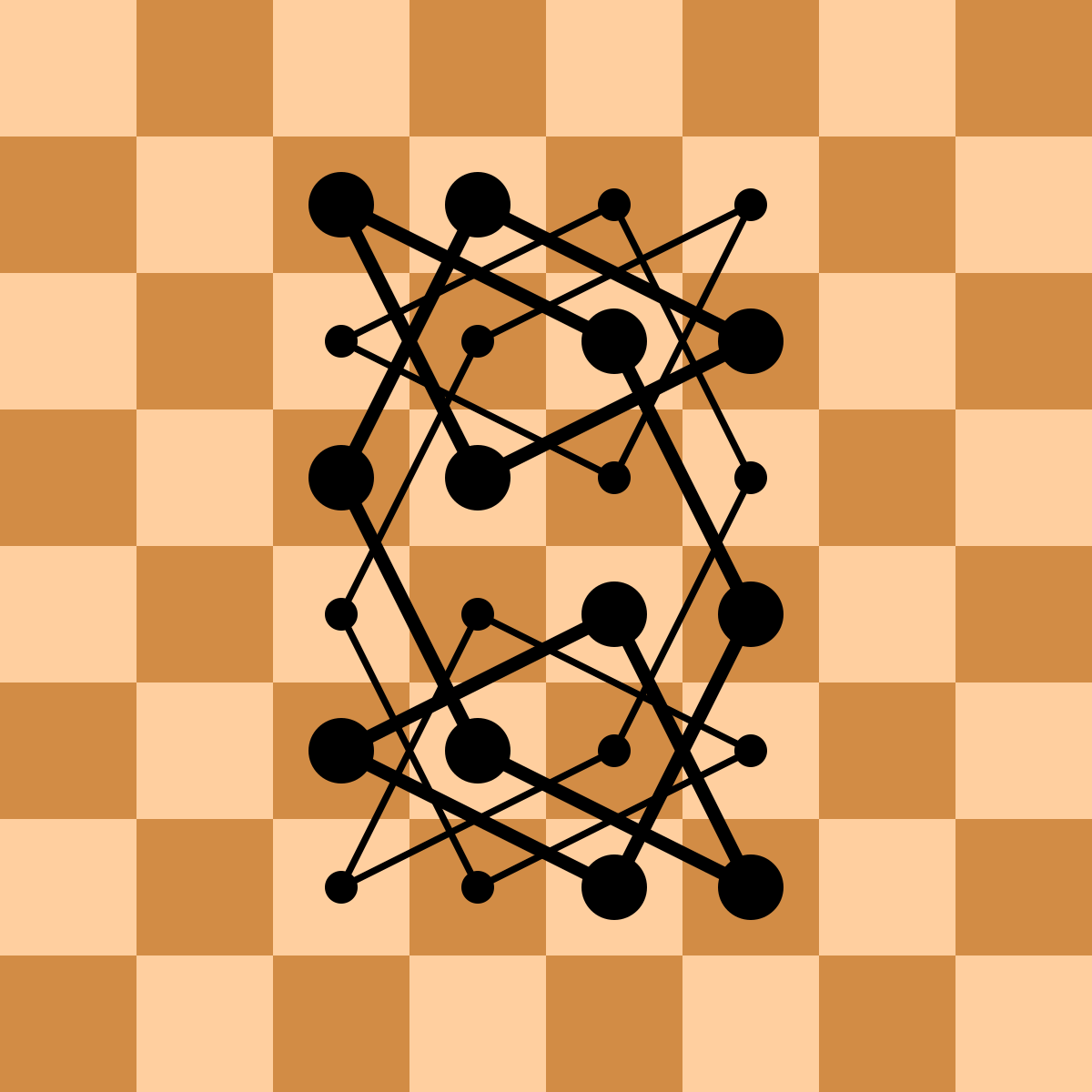
Eventually I gave up and searched online for a reason why, to find that no closed knight's tour is possible on a width 4 board.
Now knowing it was impossible, I added 2 additional squares outside the 4 by 6 grid to join the 2 separate closed tours into a single closed knight's sightseeing tour of 26 squares:
Hidden closed knight's sightseeing tour on an 8 by 8 board
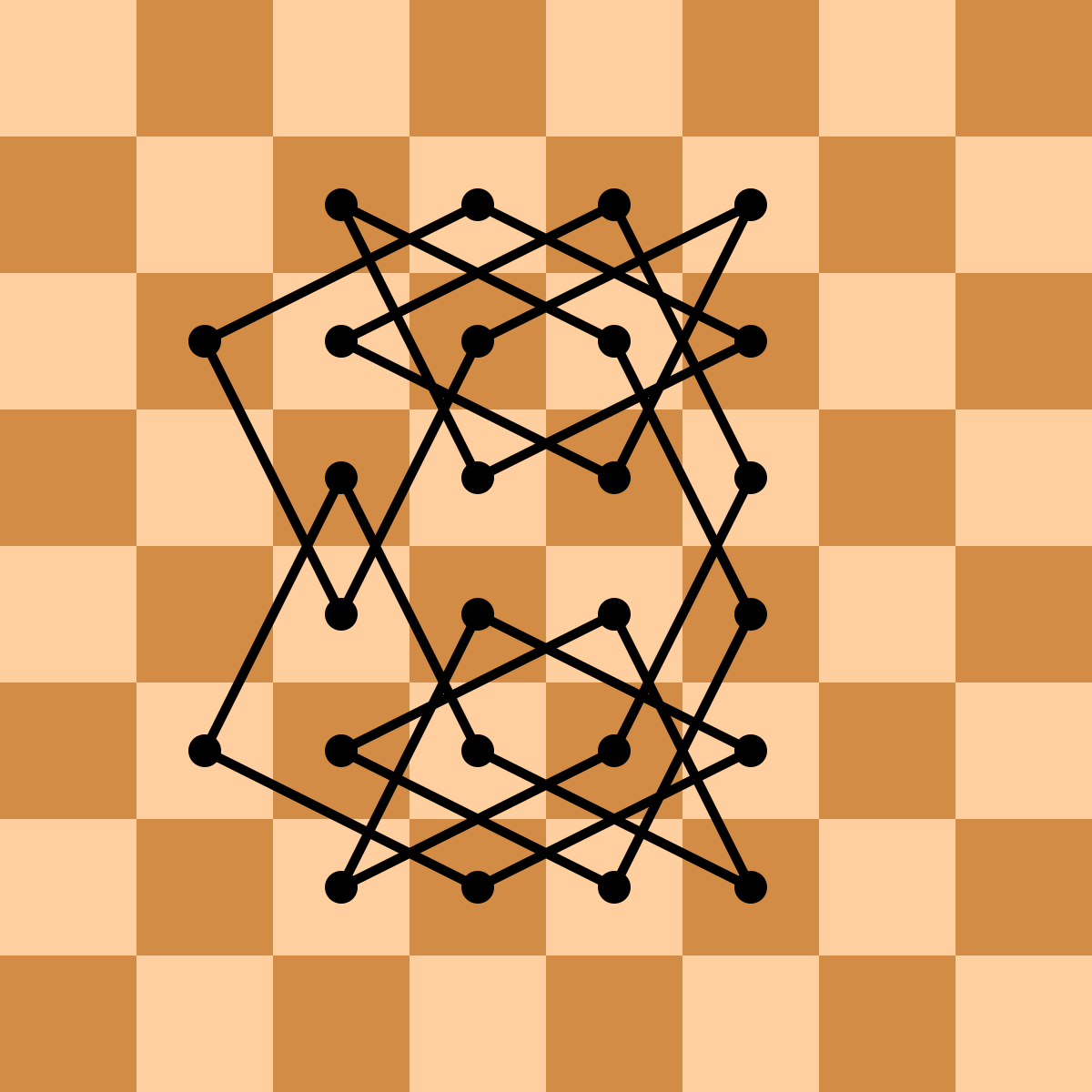
0 comment threads
The following users marked this post as Works for me:
| User | Comment | Date |
|---|---|---|
| trichoplax | (no comment) | Sep 14, 2026 at 17:15 |
My tours are inspired by trichoplax‘s answer.
Spoiler! Key idea
Subdivide the 6x6 grid from trichoplax‘s answer into four 3x3 grids that will be toured one at a time.Spoiler! Tour with 32 moves
The following tour starts at the square labeled 1 and continues 2, 3, 4, ..., 31, 32 and lastly back to 1.

After finding the above tour, I was able to reduce the number of squares visited.
Spoiler! Tour with 28 moves
The following tour starts at the square labeled 1 and continues 2, 3, 4, ..., 27, 28 and lastly back to 1.

I reduced the number of squares visited even further.
Spoiler! Tour with 20 moves
The following tour starts at the square labeled 1 and continues 2, 3, 4, ..., 19, 20 and lastly back to 1.



0 comment threads