


















Welcome to the staging ground for new communities! Each proposal has a description in the "Descriptions" category and a body of questions and answers in "Incubator Q&A". You can ask questions (and get answers, we hope!) right away, and start new proposals.
Are you here to participate in a specific proposal? Click on the proposal tag (with the dark outline) to see only posts about that proposal and not all of the others that are in progress. Tags are at the bottom of each post.
Post History
The area of a triangle can be calculated as half of the length of its base multiplied by its perpendicular height. This means that two triangles with the same length base and the same perpendicular...
#2: Nominated for promotion
by
 Monica Cellio
·
2026-09-18T00:21:09Z (about 2 hours ago)
Monica Cellio
·
2026-09-18T00:21:09Z (about 2 hours ago)
#1: Initial revision
by
 trichoplax
·
2026-03-28T02:47:22Z (6 months ago)
trichoplax
·
2026-03-28T02:47:22Z (6 months ago)
Counter-intuitive triangle areas
The area of a triangle can be calculated as half of the length of its base multiplied by its perpendicular height. This means that two triangles with the same length base and the same perpendicular height have the same area. Some people can find this counter-intuitive, but the areas can be proved to be identical by slicing up one triangle into several pieces, then rearranging the pieces to form the other triangle. This approach can be used to prove that the following two long, thin triangles have the same area: [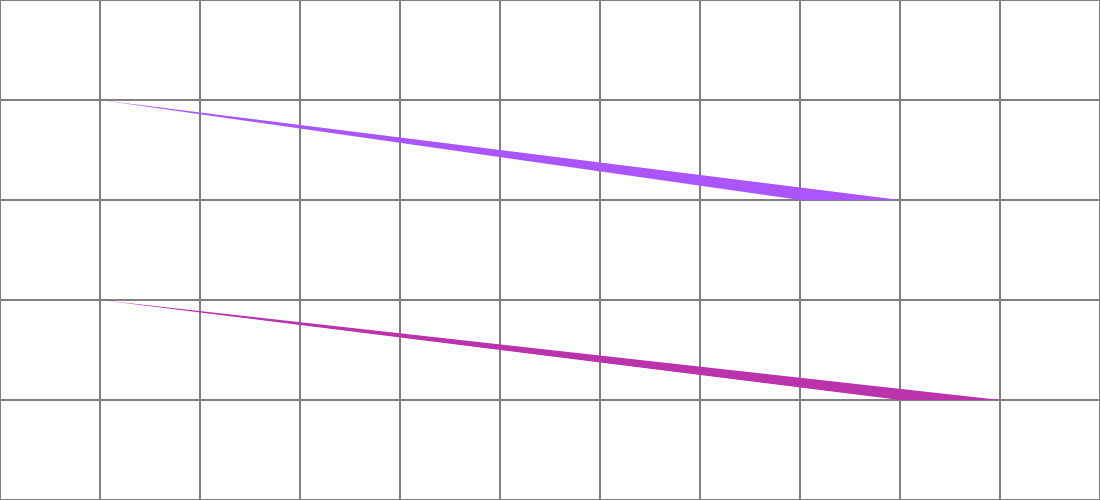](https://raw.githubusercontent.com/trichoplax/triangle-diagrams/refs/heads/main/width_8_9.svg) The triangles are displayed on a grid to make it clear that both have a base of length 1 grid square (horizontally), and a perpendicular height of 1 grid square (vertically). The first triangle has a horizontal width of 8 grid squares, whereas the second triangle has a horizontal width of 9 grid squares. ## Puzzle What is the smallest number of straight line cuts through the first triangle that will give pieces that can be rearranged into the second triangle? The cuts can be in any location at any angle. They are not required to align with the grid squares. ## Hint If you're not sure where to start, you can try the following (hidden to avoid spoilers for anyone who wants to try this unaided): <details><summary>Hidden spoiler</summary> You may find it easier to start with a smaller problem, and gradually work up until you see a pattern. Here are the smaller versions of this puzzle in increasing size: ### Width 1 to width 2 [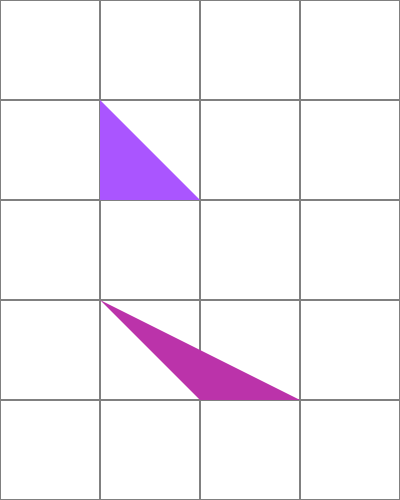](https://raw.githubusercontent.com/trichoplax/triangle-diagrams/refs/heads/main/width_1_2.svg) ### Width 2 to width 3 [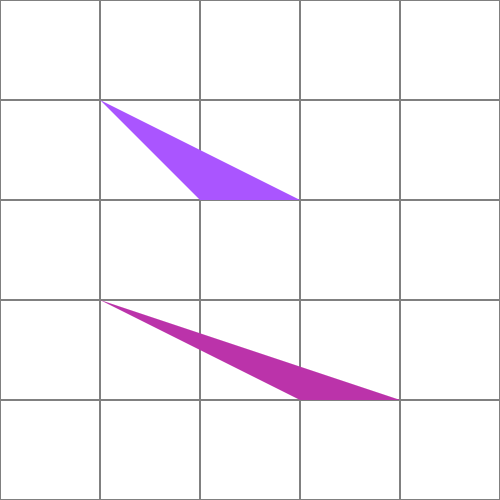](https://raw.githubusercontent.com/trichoplax/triangle-diagrams/refs/heads/main/width_2_3.svg) ### Width 3 to width 4 [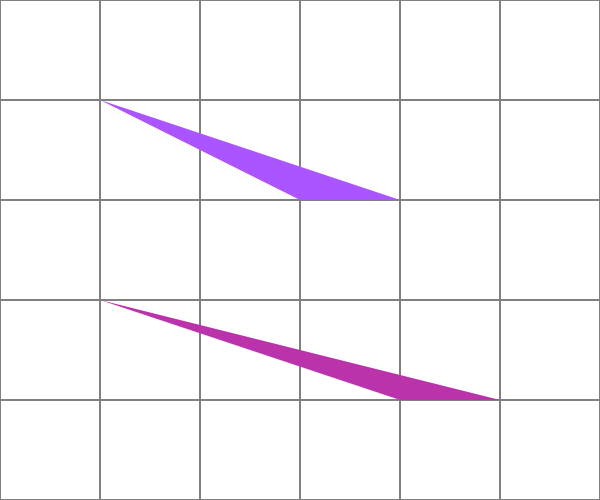](https://raw.githubusercontent.com/trichoplax/triangle-diagrams/refs/heads/main/width_3_4.svg) ### Width 4 to width 5 [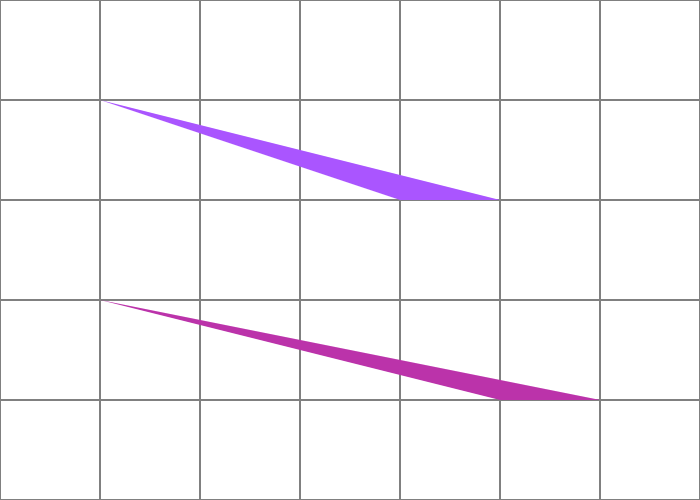](https://raw.githubusercontent.com/trichoplax/triangle-diagrams/refs/heads/main/width_4_5.svg) ### Width 5 to width 6 [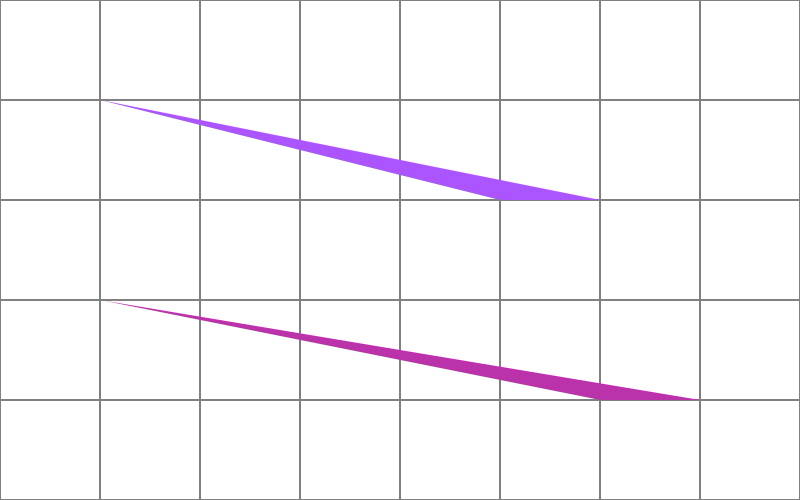](https://raw.githubusercontent.com/trichoplax/triangle-diagrams/refs/heads/main/width_5_6.svg) ### Width 6 to width 7 [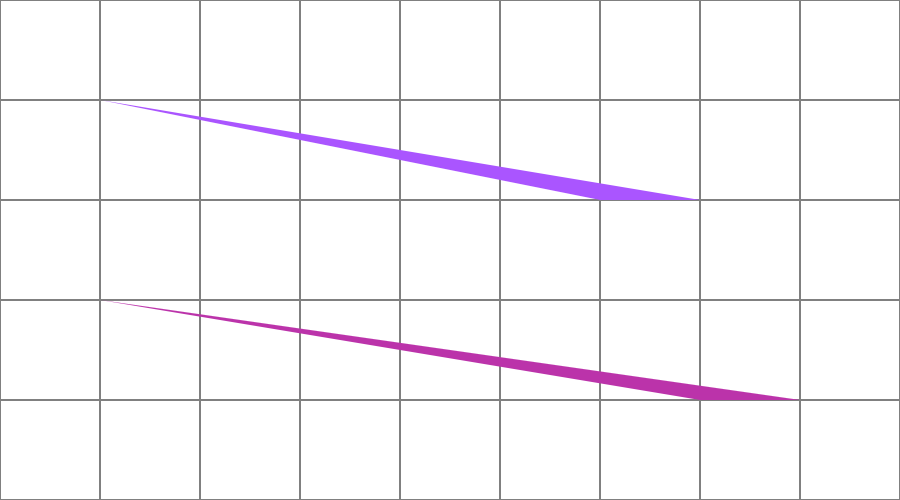](https://raw.githubusercontent.com/trichoplax/triangle-diagrams/refs/heads/main/width_6_7.svg) ### Width 7 to width 8 [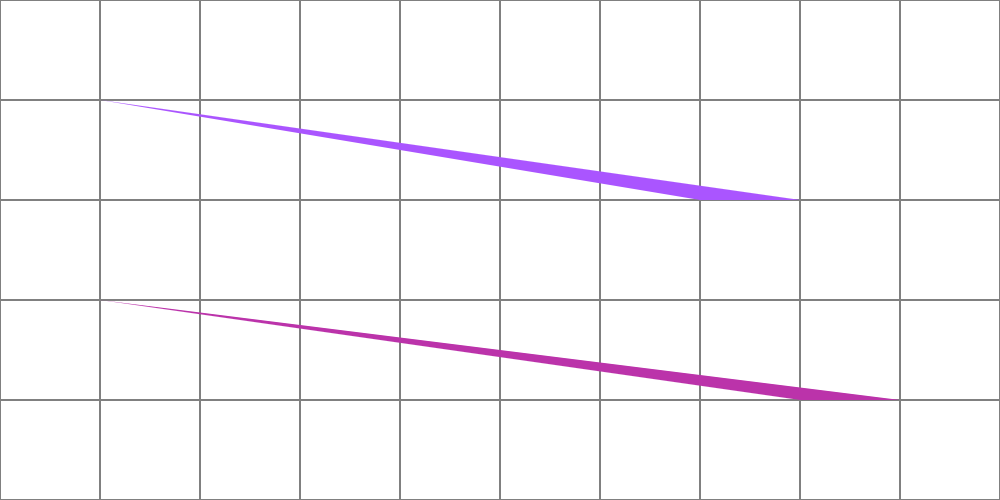](https://raw.githubusercontent.com/trichoplax/triangle-diagrams/refs/heads/main/width_7_8.svg) </details>